

My own journey towards cancer rehabilitation
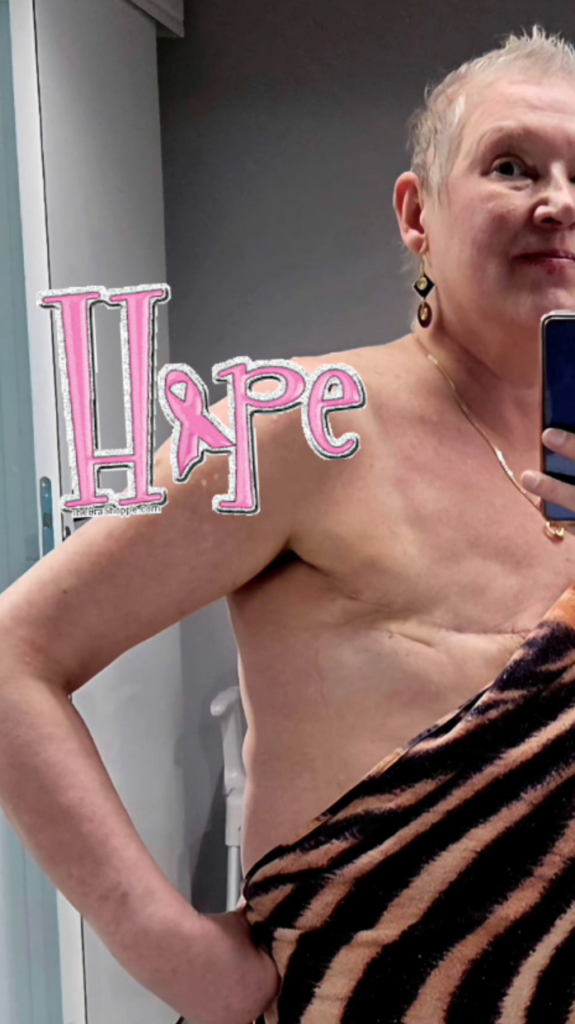
My own journey towards cancer rehabilitation began in May, when I started my studies at Karelia University of Applied Sciences. The focus of my studies is cancer rehabilitation, but for me, this is not just an academic subject. It is also a deeply personal journey.
I have felt genuinely inspired by these studies. Some of the expert lectures have been truly powerful and eye-opening. They have helped me understand pain, rehabilitation, and the many different ways cancer can affect a person’s life — not only physically, but also emotionally, mentally, and socially.
My goal is to understand cancer rehabilitation on a deeper level. At the same time, I have found myself thinking about my own expertise and lived experience. Could they have meaning in this field? Could my story, one day, help someone else feel less alone?
As part of the studies, we write reflections on different themes, such as pain, rehabilitation, and experiences related to cancer. Through these assignments, the idea for this text slowly started to grow. If I am already reflecting on these topics from my own perspective, why not share some of those thoughts here as well?
This reflection is about my own experience with triple-negative breast cancer. I was first diagnosed in 2020, when I was 48 years old. Four and a half years later, in 2025, I received a new diagnosis. And here we are now.
However, it is important to remember that:
I am not writing on behalf of everyone who has been diagnosed with cancer. Every story is different. Every person experiences illness, treatments, pain, fear, uncertainty, and hope in their own way. This is simply my way of putting into words what I have lived through — and what I am still living through.
Cancer is not only a medical diagnosis. It affects the whole person. It touches the body, the mind, everyday life, relationships, identity, and the way we look at the future. It brings questions that do not always have clear answers. What does it feel like when your own body changes? How do you cope with waiting for test results? Where do you find strength when you do not know what will happen next?
When I was diagnosed for the first time, many things came to a halt. Life was suddenly divided into the time before cancer and the time after it. Treatments, examinations, and simply getting through each day became part of everyday life. When I received a new diagnosis, many familiar emotions returned — but so did new questions. It is difficult to explain briefly what it feels like when cancer becomes part of your life again.
Through my studies, I have started to look at my own experience from a different perspective. Not only as a patient, but also as a learner, and perhaps one day as an expert in this field. Lived experience can create a deeper sensitivity to the kind of support a person with cancer may need — and to the things that are not always easy, or even possible, to say out loud.
Writing helps me organise my thoughts. It gives me a way to pause, to look at what has happened, and to understand how it all feels. At the same time, writing can open up conversations about subjects that many people find difficult: pain, fatigue, fear, uncertainty — but also hope, survival, and the need to understand one’s life again after everything has changed.
If this text helps someone, I am grateful. If someone finds peer support, comfort, or even a small feeling of not being alone, then writing this has been meaningful. And if this topic feels too heavy or distressing, it is also okay not to read further. Everyone has the right to protect themselves and to face difficult things in their own time.
As I have been thinking about this text, I am on my way to treatment. The treatments continue, and so does my own journey with this illness, rehabilitation, and the questions around my own expertise. I do not yet know what lies ahead, but right now I am moving forward one day, and one stage, at a time.